How we work
Marta follows every enquiry from the first call to the last plate. Basheer leads the kitchen.
The process
From the first email to the wedding day.
Four parties, one thread. Marta holds it from the first enquiry to the last plate.
The enquiry
Date, venue, guests, tradition. Marta replies within 24 to 48 working hours.
The familyThe plannerNURA
The conversation
The families, the days, the rules. No talk of dishes yet.
The familyThe plannerNURA
The proposal
A document written for that wedding, thirty or forty pages.
The familyNURA
The venue
Spaces, kitchen, logistics and flows, agreed with the venue and the planner.
The plannerThe venueNURA
The day
On site long before the guests arrive. Service runs in time with the ceremony.
The familyThe venueNURA
NURA leadsTakes part
Formats
Six styles of service.
A wedding usually uses three or four of them over its days.
-
Buffet
Haldi, Sangeet, large numbers
Display tables in silver, glass, wood or ceramic, with risers.
-
Seated dinner
The reception, the family dinner
Full mise en place and staff at every table, imperial or round.
-
Family style
Smaller receptions, the day after
Shared platters on the table. Fewer courses, more time.
-
Live stations
Every day of the wedding
Tandoor, dosa, chaat and pani puri, with a chef at each one.
-
Passed canapés
Mehndi, cocktail hour, Sangeet
Trays and finger food, with staff moving among the guests.
-
Street food and food truck
Welcome evening, late night
The NURA truck, the first Indian food truck in Italy.
Behind the day
The work nobody sees.
The result depends on what happens before the guests arrive: spaces, equipment, flows, and coordination with the venue, the planner and the other suppliers.
A brigade of chefs from different regions of India, the service staff, and the people who design the space. Three hundred guests in a villa without a kitchen is an ordinary day for us.
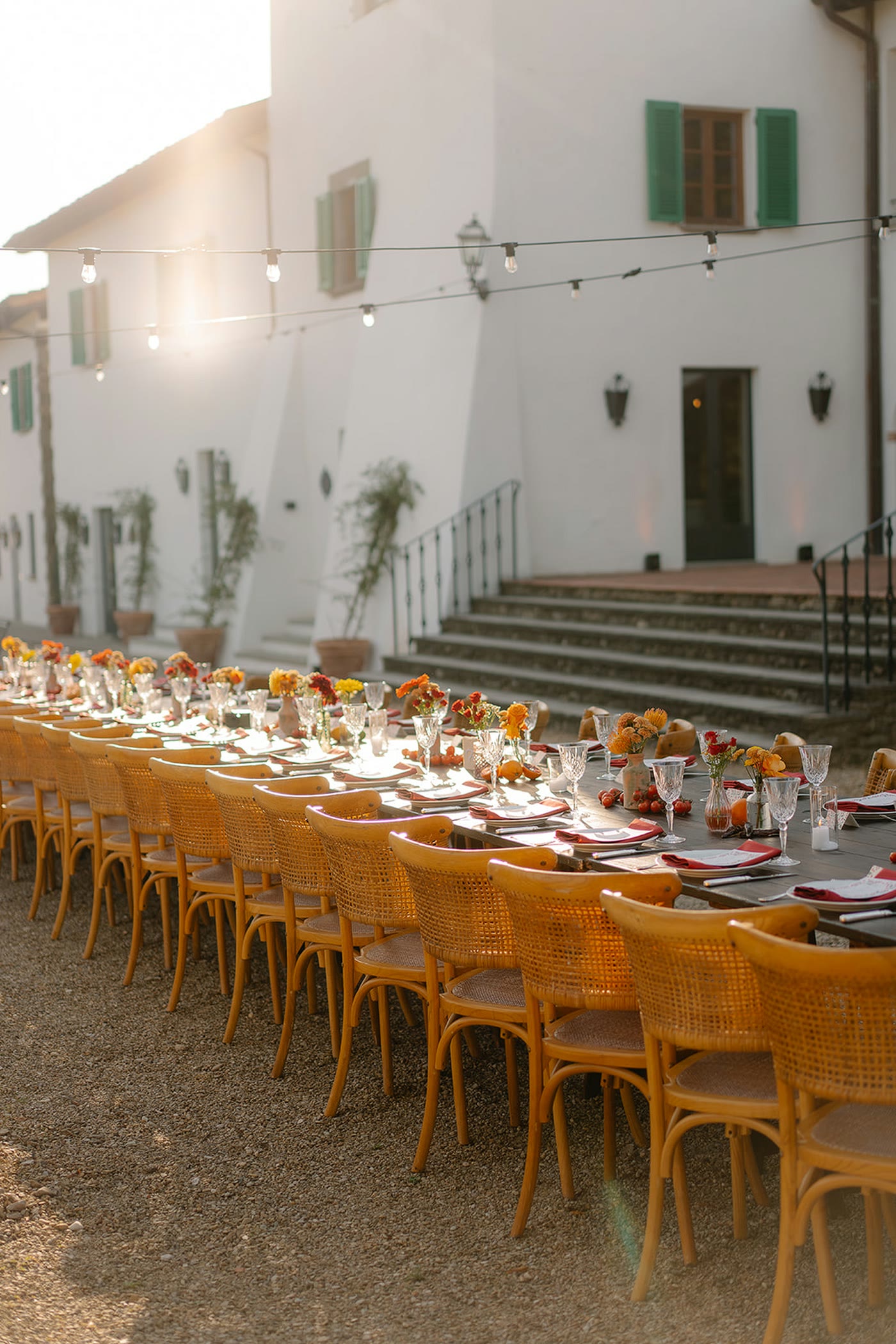
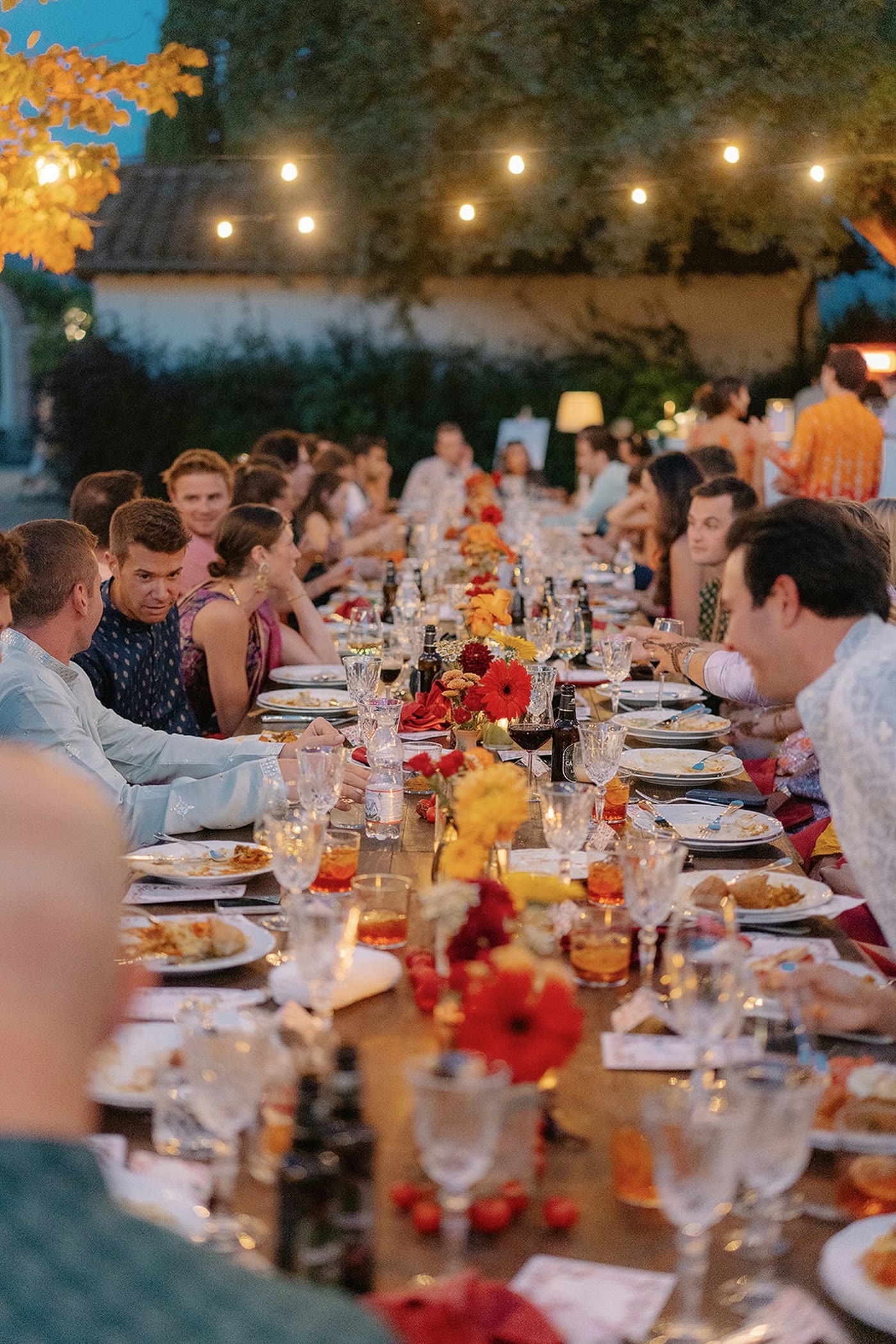
Viesca, 2025. Photo courtesy Matteo Crescentini.
- The day beforeMobile kitchen and tandoor on site, utilities connected.
- 8 hoursThe brigade arrives, preparation starts.
- 3 hoursStations, display tables and bar set.
- 1 hourBriefing with the planner and the venue.
- GuestsService runs in time with the ceremony.
For planners
The questions planners ask.
Can NURA work inside a project run by another caterer?
Yes. In food-only mode we bring the Indian cuisine, the tandoor and the live stations into a set-up run by others, and we coordinate with them.
Do you handle drinks as well?
In full-service mode, yes: the bar, beverage stations, lassi and juice dispensers, samovar and coffee stations.
What does NURA need from the venue?
Where there is a professional kitchen, we use it. Where there is none, we bring a mobile kitchen and agree its position, access and utilities with the venue.
How quickly do you reply?
Within 24 to 48 working hours. On days when the team is on an event it can take a little longer.
Send us the date and the venue.
We'll tell you in writing what the day will require.